
What the Egyptian Drug Authority means by a trade name, a generic name, a «مثيل» (similar) and a «بديل» (alternative), where its guideline asks for the active ingredient on a pack, and six questions for your pharmacist.
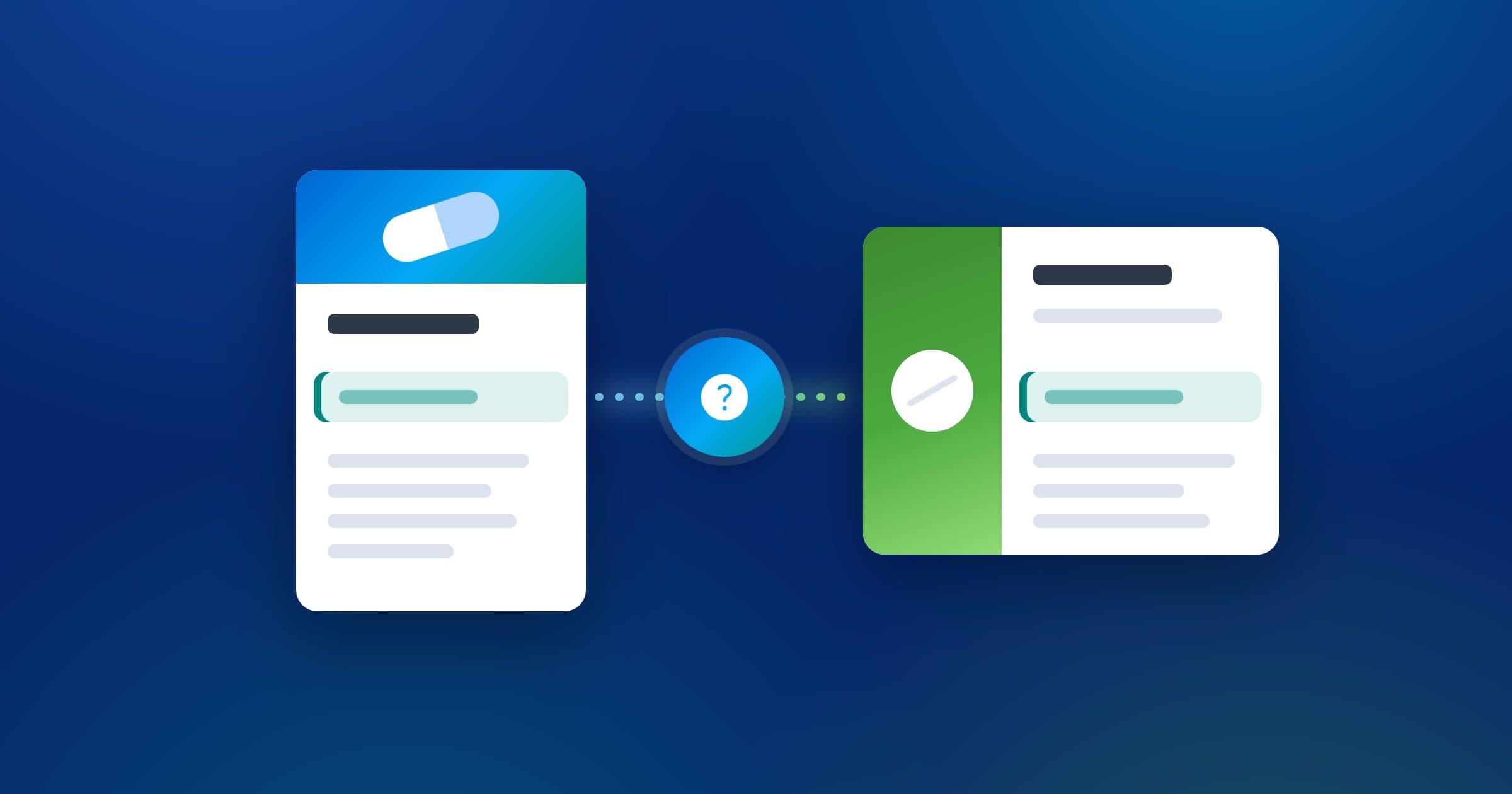
A brand (trade) name is the name a product is sold under; the generic name is the common name of its active ingredient. The Egyptian Drug Authority (EDA) defines a «مثيل» (similar) as a medicine with the same active ingredient, concentration, indications and dosage form as the original, differing only in trade name (read 1 November 2026). Ask your pharmacist to show you the active ingredient on both packs.
This guide uses the Authority’s own pages and guidelines, with WHO and FDA pages, read on 1 November 2026. It names no brand, maker or pharmacy, gives no doses and cannot say whether a «مثيل» suits you: ask your pharmacist or doctor.
In short:
- The Authority’s pack guideline asks for each active ingredient and its quantity under the trade name on the outer pack (version 3.0, May 2023).
- A «بديل» (alternative) has a different active ingredient from the original; the Authority advises going back to the treating doctor when alternatives are used.
- Its bioequivalence guideline says pharmaceutical equivalents (the same molar amount of the same active ingredient in the same dosage form) are not necessarily therapeutically equivalent, so ask your pharmacist before you accept a «مثيل».
Last checked: 1 November 2026, on the pages listed under Sources. The bioequivalence guideline took effect on 1 July 2026; open the pages again before you rely on this guide.
What is the difference between a brand name, a generic name and a «مثيل»?
The Authority’s terms, with WHO’s for the generic name (read 1 November 2026):
| Term | What it means |
|---|---|
| Trade (brand) name «الاسم التجاري» | The name the product is sold under. The Authority’s database document describes it as “the brand name of the drug”. |
| Generic name, usually called «الاسم العلمي» | The same document describes it as the common name of the drug’s active ingredient. WHO describes each International Nonproprietary Name as a unique, globally recognised name for an active substance, and says a nonproprietary name is also known as a generic name. |
| Original medicine «الدواء الأصيل» | The Authority’s word for the medicine a «مثيل» is compared with. |
| Similar «مثيل» (plural «مثائل») | The same active ingredient, concentration, indications and dosage form as the original; it differs «فقط من حيث الاسم التجاري» (only in trade name), in the Authority’s PDF on similars and alternatives. |
| Alternative «بديل» | A different active ingredient from the original, for the same disease. |
Where is the active ingredient printed on a medicine pack in Egypt?
The Authority’s pack mock-up guideline (code EDREX:GL.CAPP.022, version 3.0, May 2023, sections 3.3 and 3.4.1) tells companies what to show on a pack when they submit its mock-up for approval (read 1 November 2026). We have not checked any pack against it. The right-hand column summarises its text:
| Where | What the guideline asks |
|---|---|
| Principal display panel (the panel most likely to be seen) | Trade name; name and strength of each active ingredient (with more than three, they may go on the side); dosage form and route of administration; contents (section 3.3). |
| Outer label, under the trade name and on the side | The active ingredients, which it says “must be identical to the approved generics”: under the trade name with their quantities, and on the side in hydrate or salt form with equivalent amounts (section 3.4.1). |
| Outer label, other lines | Batch number; manufacturing and expiry dates; the Authority’s registration number and year; the approved price; all in English and Arabic (section 3.4.1). This is the 2023 text; whether a printed price stays on packs was argued in July and August 2026 (price guide below). |
| Leaflet | The head carries trade name, strength, dosage form and active ingredient; section 6 of the Arabic template lists active ingredients by name and amount and inactive ones by name (leaflet guideline, version 4, effective 20 September 2024). |
The guideline says leaving out some information may be considered for imported products or small-volume containers, and should be justified (section 3.1). So read your own pack and ask the pharmacist to point to the line. The leaflet’s sections are in how to read a medicine leaflet in Egypt; where a price is shown, and what was argued about it, is in how to find a medicine’s official price in Egypt.
Is a «مثيل» the same as the original medicine?
The Authority defines it as the same in active ingredient, concentration, indications and dosage form, and different only in trade name (read 1 November 2026). Whether it performs the same for you is for your doctor or pharmacist. These are definitions, not a statement that one medicine can replace another for you.
The Authority’s bioequivalence guideline (version 4, effective 1 July 2026) is written for the studies behind registering generic products, and uses other terms: generic product, pharmaceutical equivalent and interchangeable. We set them beside «مثيل» without saying they mean the same. It applies generally to orally administered generic products and some non-oral ones; many biological products, such as vaccines, are excluded.
It says a generic product “may or may not be therapeutically equivalent” and calls the therapeutically equivalent ones interchangeable. Pharmaceutical equivalents (the same molar amount of the same active ingredient in the same dosage form and route, meeting comparable standards) are not necessarily therapeutically equivalent, it adds, because differences in excipients (inactive ingredients), manufacturing and some other variables can lead to differences in performance.
FDA’s generic-drugs page (current as of 18 September 2026) says inactive ingredients can differ between companies’ products and that, in a minority of patients, they may affect tolerability or absorption.
What should I ask the pharmacist before accepting a «مثيل»?
The questions are our wording; the right-hand column gives the source or reason for each.
| Ask | Why |
|---|---|
| Is the active ingredient, its strength and the dosage form the same as on my prescription? Show me on both packs. | The Authority’s definition of «مثيل». |
| Is this a «مثيل» or a «بديل»? | The Authority separates the two and advises going back to the treating doctor when alternatives are used. |
| Does its list of inactive ingredients include anything I have reacted to before? | Inactive ingredients can differ (FDA; the Authority’s guideline); the leaflet lists them by name. |
| Do I already take something with the same active ingredient under another name? | Our reading of the definition: a «مثيل» differs only in trade name, so one ingredient can sit on two packs. |
| Does my doctor need to know, and who tells them? | Our question. The Authority pages we read do not say who may choose a «مثيل» for you; the pharmacy law is not covered here. |
| May I have the leaflet that belongs to this pack? | The Authority’s leaflet guideline treats approval of the leaflet as part of authorising a medicine (section 3). |
Do not stop or switch a medicine on your own: ask the doctor who prescribed it. What to do when a medicine is out of stock in Egypt explains the Authority’s «مثيل و بديل» search page, which covers some important preparations and asks you to consult your doctor when using alternatives (read 1 November 2026).
In Egypt: where can I check a name?
The Authority’s registered-drugs search (EDDB) lets you search by trade name, registration number, applicant or generic name, according to its document (code EDREX:NP.PPMA.18, issued 6 June 2024; read 1 November 2026). We did not run a search, so we cannot describe the results; the steps are in the price guide linked above. A registration entry is not proof that your pack is genuine: ask your pharmacist.
Where Medigize stands
Medigize is a navigation tool. It is not part of the Authority, it does not check packs, and it does not sell, recommend or rate medicines. We are building a record that moves with the patient, shared only with their consent. If you would like to follow that work, you can register your interest.
Frequently asked questions
What is the difference between a brand name and a generic name in Egypt?
The brand (trade) name is the name a product is sold under. The generic name is the common name of its active ingredient (the Authority’s database document, read 1 November 2026).
Does a «مثيل» work the same as the original?
That is for your doctor or pharmacist to say. The Authority’s bioequivalence guideline says a generic product may or may not be therapeutically equivalent; it uses its own terms, not the word «مثيل» (read 1 November 2026).
Can I swap one for the other myself?
No: do not stop or switch a medicine on your own. Ask your pharmacist, and ask the doctor who prescribed it before you change how you take it.
Medigize is a non-diagnostic navigation tool. This is general information, not medical advice. In an emergency, call an ambulance or go to the nearest emergency department.
Sources
- Egyptian Drug Authority (EDA): Guidelines for Mock-up Design of Human Pharmaceutical Products, code EDREX:GL.CAPP.022, version 3.0, issued May 2023 (PDF), read 1 November 2026
- Egyptian Drug Authority (EDA): Egyptian Guideline for Conducting Bioequivalence Studies for Marketing Authorization of Generic Products, code EDREX:GL.CAPP.024, version 4, issued 23 June 2026, effective 1 July 2026 (PDF), read 1 November 2026
- Egyptian Drug Authority (EDA): announcement of 23 June 2026 on the fourth edition of the bioequivalence guidelines, read 1 November 2026
- Egyptian Drug Authority (EDA): regulatory guidelines of the Central Administration for Pharmaceutical Products, listing the mock-up guideline (issue 03, May 2023) and the bioequivalence guideline (issue 04, June 2026), read 1 November 2026
- Egyptian Drug Authority (EDA): Egyptian Guidelines for Medical Leaflets of Medicinal Products for Human Use, version 4, code EDREX:GL.CAP.Care.032, effective 20 September 2024 (PDF), read 1 November 2026
- Egyptian Drug Authority (EDA): examples of similars and alternatives of the most important preparations, with the difference between the two (PDF, Arabic, no date on its pages), read 1 November 2026
- Egyptian Drug Authority (EDA): similars and alternatives («مثيل و بديل») search page, read 1 November 2026
- Egyptian Drug Authority (EDA): Mechanism of Egyptian Drug Database (EDDB) Searching Tool, code EDREX:NP.PPMA.18, version 1, issued 6 June 2024 (PDF), read 1 November 2026
- Egyptian Drug Authority (EDA): registered-drugs search (EDDB), read 1 November 2026
- World Health Organization (WHO): International Nonproprietary Names (INN), read 1 November 2026 (page undated)
- US Food and Drug Administration (FDA): Generic Drugs, Questions and Answers, content current as of 18 September 2026, read 1 November 2026
Last updated:
Explore Medigize
Medigize is in development. Explore our current scope and express your interest.