
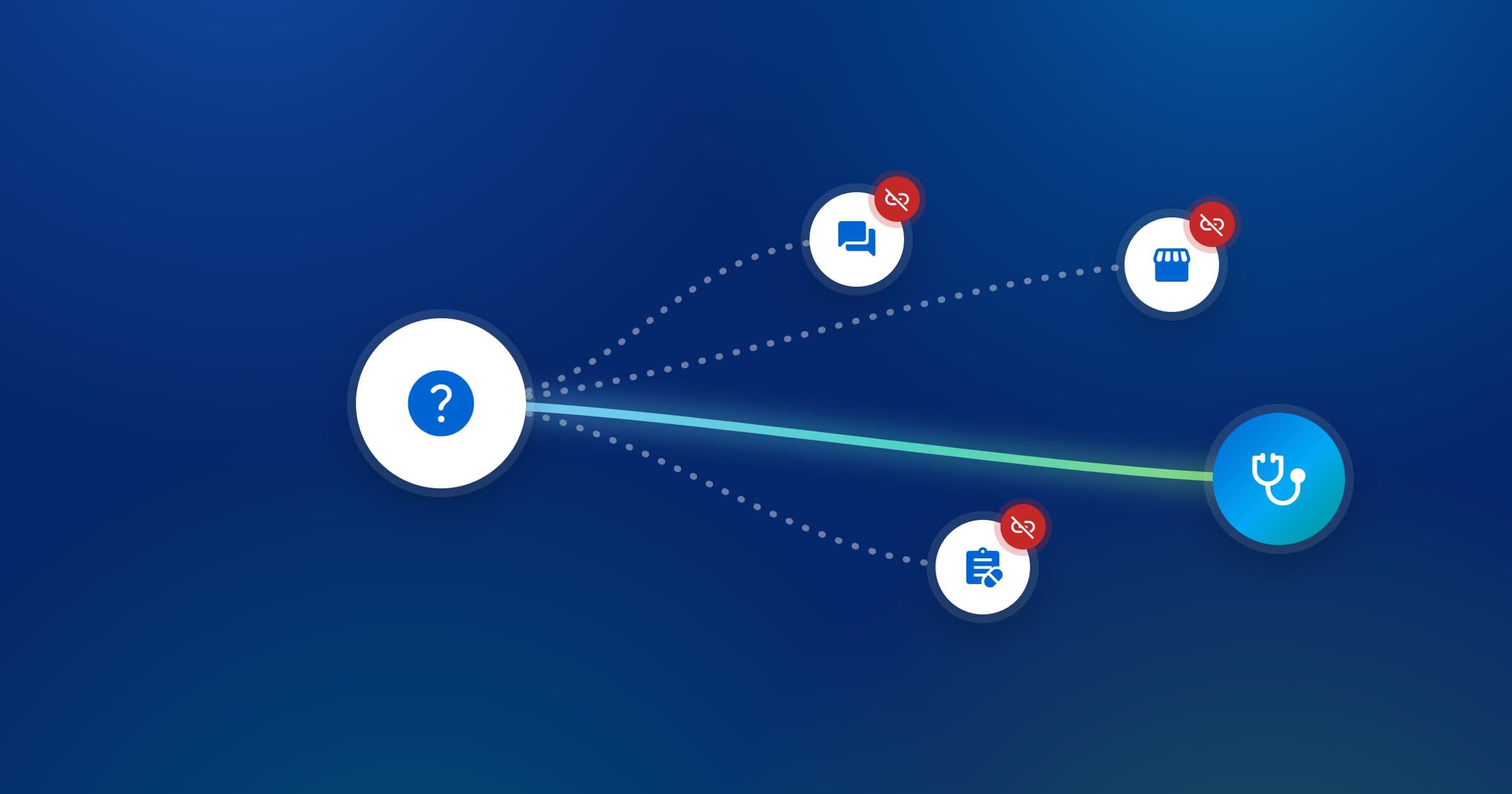
At home, when a symptom appears, the first question is not “what do I have?” It is “where do I go, when, and for how much?” Seven stops, and what the journey costs.
At home, when a symptom shows up, the first question is rarely “What do I have?” It is “Where do I go? When? And at what cost?”
Follow a composite journey built from many real cases, with every identifying detail removed. Someone has a symptom that keeps coming back. They ask the family WhatsApp group. Someone suggests a painkiller “until we see”. They visit a nearby pharmacy, then a clinic in a neighbouring specialty that is not the right one. They do tests, and a paper result gets lost between two visits. Finally they reach the right specialist, and the doctor starts from zero.
Seven stations, and every one did its job. The pharmacist did theirs, the doctor did theirs, the lab did theirs. What broke was the journey.
In short:
- A fragmented journey costs time, repeated tests, a story retold at every visit and, sometimes, reaching the right level of care later than you should.
- Nobody in it is at fault. What is missing is someone who sees the whole journey. Until that exists, three lines written after every stop let you carry most of it.
- Medigize is building that layer: the Medigize app for patients and Medigize Dock for providers. It does not diagnose, and it does not choose for you.
What is a fragmented patient journey?
A fragmented patient journey is one where every stop does its own job, but nothing carries the story, the results and the next step from one stop to the next. The patient becomes the only link between them, and pays in time, repeated tests, a story told again at every visit and, sometimes, a late arrival at the right level of care.
Two terms name what breaks. Continuity of care, in the World Health Organization’s practice brief on continuity and coordination of care, is the extent to which separate health care events are experienced as coherent and connected over time. One part of it, informational continuity, means clinical information is available at every encounter: whoever you see, your story is already there. A lost paper result breaks exactly that.
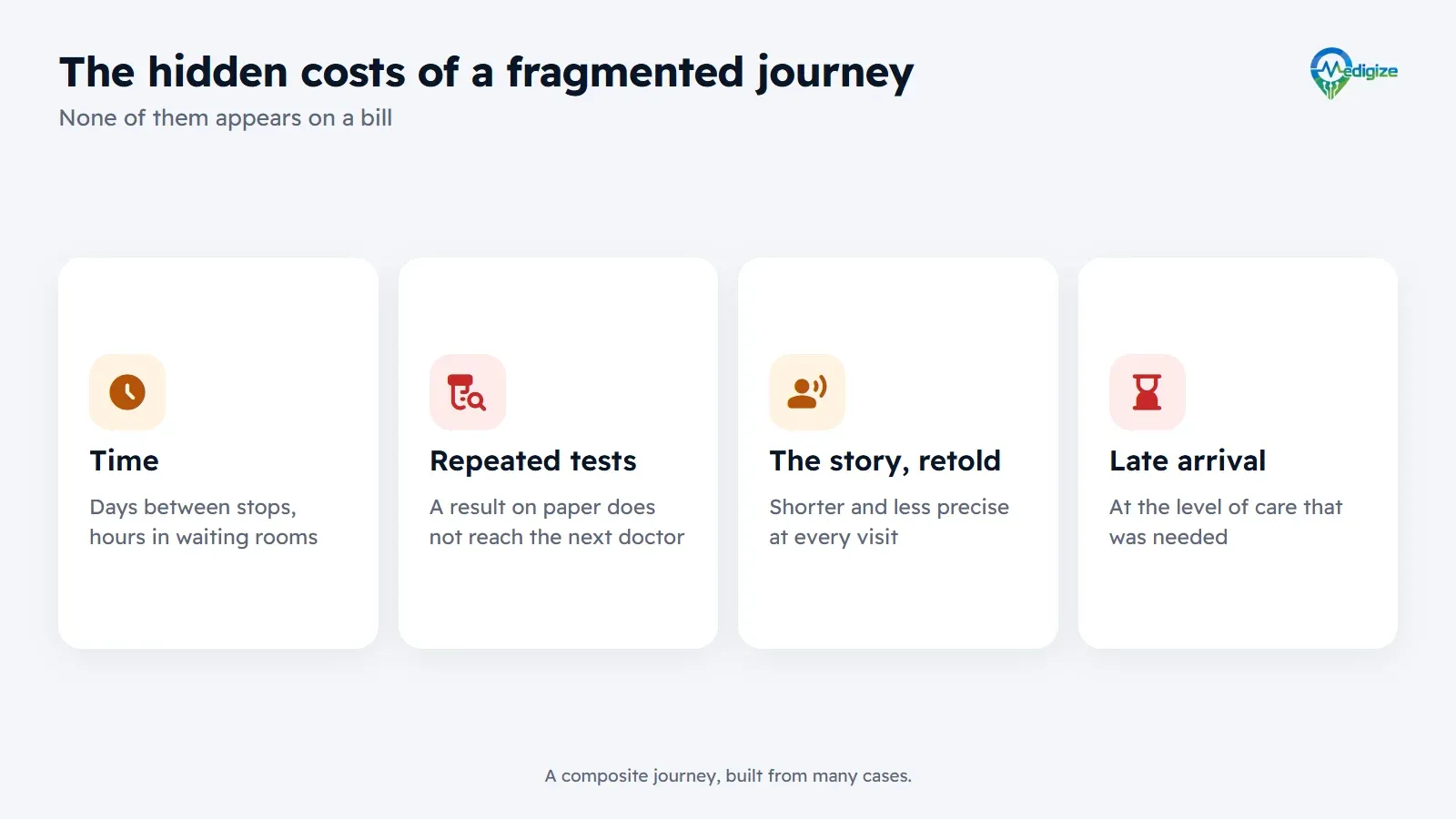
None of these costs appears on a bill, and every patient on this journey pays them.
The hidden costs, one by one
A fragmented journey rarely fails in one dramatic moment. It leaks, a little at each step:
- Time. Days between stops, hours in waiting rooms, and the trip to a clinic that turns out to be the wrong one.
- Money. Another consultation, a test done twice, another ride across town. Each has its own small receipt. The total appears on none of them.
- Repeated tests. A result on paper in a bag at home is, for the next doctor, a result that does not exist. So it is done again.
- The story, retold. Each new person hears the complaint for the first time, in a shorter and less precise version than the last.
- Arriving late. Sometimes a patient reaches the level of care they needed later than they should have, because nothing pointed the way.
- Worry. Not knowing where you are in the journey, or what happens next, is a cost of its own.
Each of these is small on its own. Together they are most of what makes a health journey exhausting, and almost none of them happens inside a consultation. They happen in between. We walked through the stops one by one in Seven stops, and every one worked.
This is more than comfort. The same WHO brief links poor continuity and coordination to a risk of harm from failures of communication, inadequate sharing of clinical information, poor reconciliation of medicines and duplication of investigations, which is the formal name for the test done twice.
If nobody is at fault, where does the journey break?
It is tempting to look for the person who made the mistake. In this journey there is none. The pharmacist gave sensible advice. The first doctor examined what was in front of them. The lab ran the test it was asked to run.
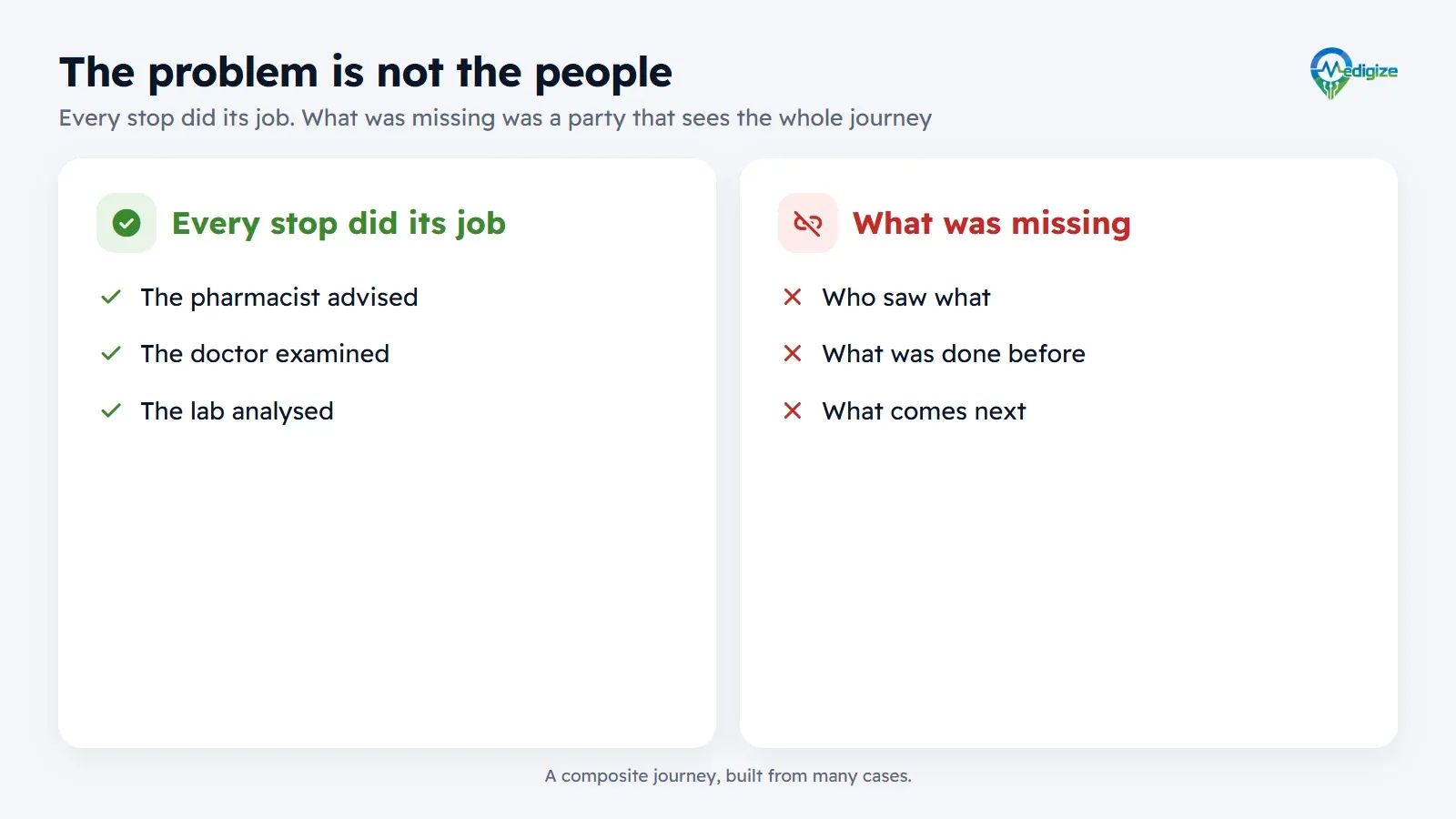
The gap is not a person. It is the space between people.
What is missing is the party that sees the whole journey: who saw what, what was already done, and what comes next. Without it, time is lost, tests are repeated, and sometimes a patient reaches the right level of care later than they should. The journey comes to depend on the patient remembering everything, carrying everything, and guessing the next step. The World Health Organization’s patient safety fact sheet names breakdowns in communication between providers, and between providers and patients and families, among the factors behind avoidable harm. The risk sits in the handovers.
Look closely and the breaks have the same few causes:
- Each place keeps its own records. Results travel between them by hand: on paper in a bag, or as a photo in a chat, often without a date.
- Each stop ends with advice, not a handover. “See a specialist if it continues” names no person, no date, and nobody who checks that it happened.
- Medicines get lost between stops. WHO’s 2019 report on medication safety in transitions of care says medication discrepancies affect almost every patient who moves across transitions of care, such as admission to or discharge from hospital.
The WHO brief lists coordination roles, such as system navigators, among the ways to improve coordination. In most journeys like this one, that role is empty, and the patient fills it by default.
What does your own journey look like?
Think of the last time you or someone close to you went looking for care. Count it out below, stop by stop. Your numbers stay on this page unless you choose to share them.
Try it
Count your last journey
Think of the last time you, or someone close to you, looked for care. Count it here.
Your journey appears here as you count it.
Your numbers stay on this page unless you share them.
How can you keep your own journey connected?
Until someone holds the whole journey for you, you can carry most of it yourself. Replay the composite journey above with one change: after every stop, three lines are written down. Who was seen and what they said. What was done. What comes next, and who owns it. The painkiller goes on the page with its start date, the results come home as dated copies, and the right specialist receives one page before the patient says a word. The doctor still asks, examines and decides, but does not start from zero.
You can do the same today, on paper or on your phone:
- Start a log the day the complaint starts. Note when it began and what makes it better or worse, the details MedlinePlus, the US National Library of Medicine’s health site, suggests giving your doctor. The one-minute description in Every patient journey starts with a question makes a good first entry.
- List everything you take. Include anything a relative or a pharmacist suggested. The US National Institute on Aging suggests bringing your medicines, or a list of them with their doses, to appointments.
- After every stop, write the three lines. Make the third one specific: who owns the next step, and by when.
- Leave every lab and clinic with a dated copy. Keep all results in one folder, oldest first, and bring the whole folder. A guide from the US Office of the National Coordinator for Health IT puts the habit in three steps: get your records, check them, use them. More in questions to ask your doctor about your lab results.
- Before you book the next stop, ask two questions. Does this clinic see this kind of complaint, and what should I bring? A recommended name tells you whom someone trusted, not whether the specialty fits. If the specialty is unclear, a general practitioner or family doctor can examine you and refer you on: the World Health Organization describes primary health care as the so-called “front door” of the health system.
- At the next stop, hand over the page first. Bring someone if you can, keep asking until you understand, and leave with the next step in writing.
One exception comes first: severe chest pain, trouble breathing, fainting or loss of consciousness, or signs of a stroke. Call an ambulance or go to the nearest emergency department, and do not wait for an app. Why no app should make that judgement is in Urgency is the clinician’s call.
What does a fragmented journey cost a clinic?
Clinics pay too, in ways that rarely appear in a report: consultation minutes spent rebuilding a history that existed elsewhere, tests ordered again because earlier ones arrived undated or not at all, slots taken by patients in the wrong specialty, and follow-up that nobody owns.
Some of this can change without a new system. AHRQ, the US Agency for Healthcare Research and Quality, describes care coordination as making sure a patient’s needs and preferences are known ahead of time and communicated at the right time to the right people. Three habits put that into practice:
- Ask for the story before the visit. When a patient books, ask them to bring earlier results with their dates and a list of their medicines. We looked at why intake keeps repeating itself in Why does every form ask the same questions?
- End every visit with a handover, not advice. AHRQ’s tool on following up with patients suggests deciding the reasons for follow-up and who is responsible for it.
- Ask patients how they want to be contacted, as the same tool suggests, so the follow-up reaches them.
Before changing anything, measure the path as it is today. The four baseline measures in how to measure care operations are a simple start.
How Medigize thinks about it
Medigize is building a healthcare navigation and care operations layer for the Middle East and Africa. It helps patients understand where to go next, and gives providers the tools to run the journey from intake to follow-up.
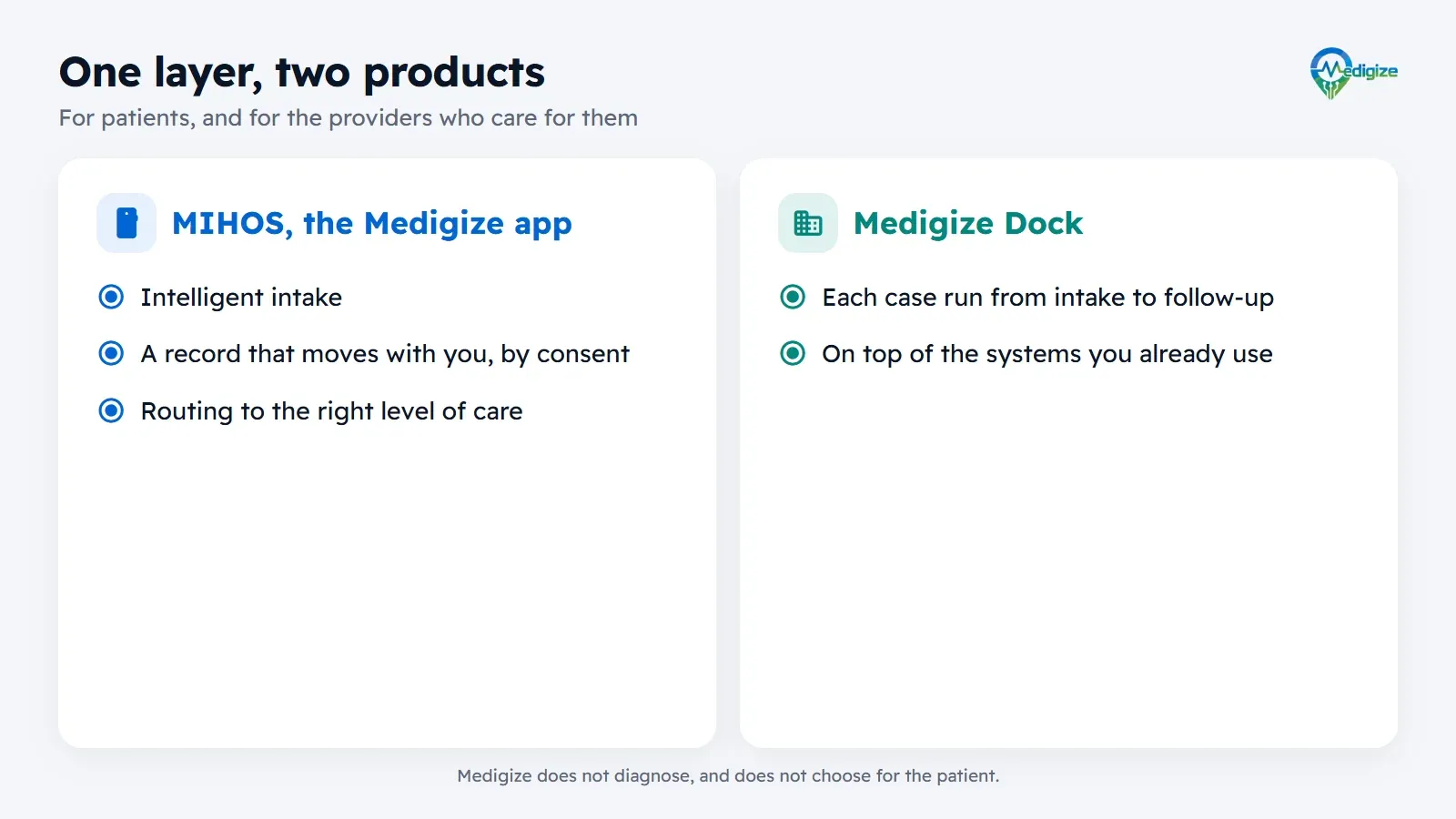
One layer, two sides of the same journey.
- MIHOS, the Medigize app, for patients: smart intake, a health record that moves with them by consent, and navigation to the right level of care. Medigize for patients.
- Medigize Dock, for providers: case operations from intake to follow-up, on top of their existing systems. Medigize for providers.
The log and the folder above are a paper version of the patient’s side, and they work without us.
And we state what we will not do from day one: we do not diagnose, we do not choose for the patient, and a clinician stays in every medical decision. We explained why in Three things we won’t build.
An honest limit
We are still building, and we do not promise results before we measure them. Any effect we claim will come after a real measurement in a controlled pilot, against a starting point measured first, the way we described in what care operations means.
A question for you: if you have been through a journey like this, which station cost you the most time?
Frequently asked questions
What is a fragmented patient journey?
A journey where each stop works on its own but nothing connects them: the story restarts at every visit, results travel on paper, and the next step depends on the patient remembering it.
What are the hidden costs of fragmented care?
Time, money for extra visits and repeated tests, the story retold at every visit, worry, and sometimes reaching the right level of care late. None of them appears on a single bill.
Why do tests get repeated between doctors?
Usually because the earlier result is not available to the new doctor, or it is on paper without a clear date. Bringing every result with its date reduces repeats.
Who is supposed to coordinate my care?
In many health systems, nobody holds that role across different facilities. Until someone does, keeping your own written summary, results and medicine list in one place is the best substitute.
How do I know where to go first?
Signs of an emergency mean an ambulance or the nearest emergency department. Otherwise, if the specialty is unclear, a general practitioner or family doctor can examine you and refer you on.
Is Medigize a clinic or a hospital?
No. Medigize is a non-diagnostic navigation and care operations layer. It connects the journey; the care itself is given by licensed clinicians and providers.
What are MIHOS and Medigize Dock?
MIHOS is the Medigize app for patients: intake, a record shared by consent, and navigation. Medigize Dock is the providers’ side: running each case from intake to follow-up, on top of the systems they already use.
Medigize is a non-diagnostic navigation tool. This article is general information, not medical advice. In an emergency, call an ambulance or go to the nearest emergency department.
References
- World Health Organization: Patient safety (fact sheet)
- World Health Organization: Medication safety in transitions of care (2019)
- athenahealth Knowledge Hub: Patient experience
- World Health Organization: Continuity and coordination of care, a practice brief (2018)
- World Health Organization: Primary health care (fact sheet)
- MedlinePlus: Talking with your doctor
- National Institute on Aging: How to prepare for a doctor’s appointment
- Office of the National Coordinator for Health IT: The guide to getting and using your health records
- Agency for Healthcare Research and Quality: Care coordination
- Agency for Healthcare Research and Quality: Follow up with patients (Health Literacy Universal Precautions Toolkit, Tool 6)
Last updated:
Explore Medigize
Medigize is in development. Explore our current scope and express your interest.